WFN — [WANTED-FOR-NOTHING]
tech & design consultancy

Diverse Team
Strategic Thinking
Quality Relationships


Trusted by:



Awwwards-recognized designers and engineers · Inc. 5000
Why food & beverage brands need an agency that understands the category
Brands evolve. Consumers evolve. Your digital has to evolve with them.
Food and beverage companies operate across retail, e-commerce, content, innovation, and new markets at once. Most still run on a website built for one of those, with a brand that looks different in each. The gap shows up as lost trust, weaker engagement, slower shelf velocity, and a brand that feels less relevant than the product.
CPG companies usually come to us at a turning point: a product launch, retail expansion into new markets, a brand refresh, a product portfolio the current site can’t hold, or a DTC push that needs a real e-commerce platform behind it. We build digital ecosystems that unify the brand across markets, turn a large product portfolio into something consumers can actually search and browse, connect the site to the shelf with where-to-buy, support retail and DTC together, and let global teams move at the speed consumers expect.
There’s a newer shift too. Consumers increasingly ask ChatGPT, Perplexity, and Google’s AI Mode what to buy, and AI shopping agents are starting to complete the purchase. A product catalog that isn’t structured for agentic search is invisible in that channel. We build catalogs, content, and feeds so your products get found and recommended there, alongside Google and Amazon.
Featured case study

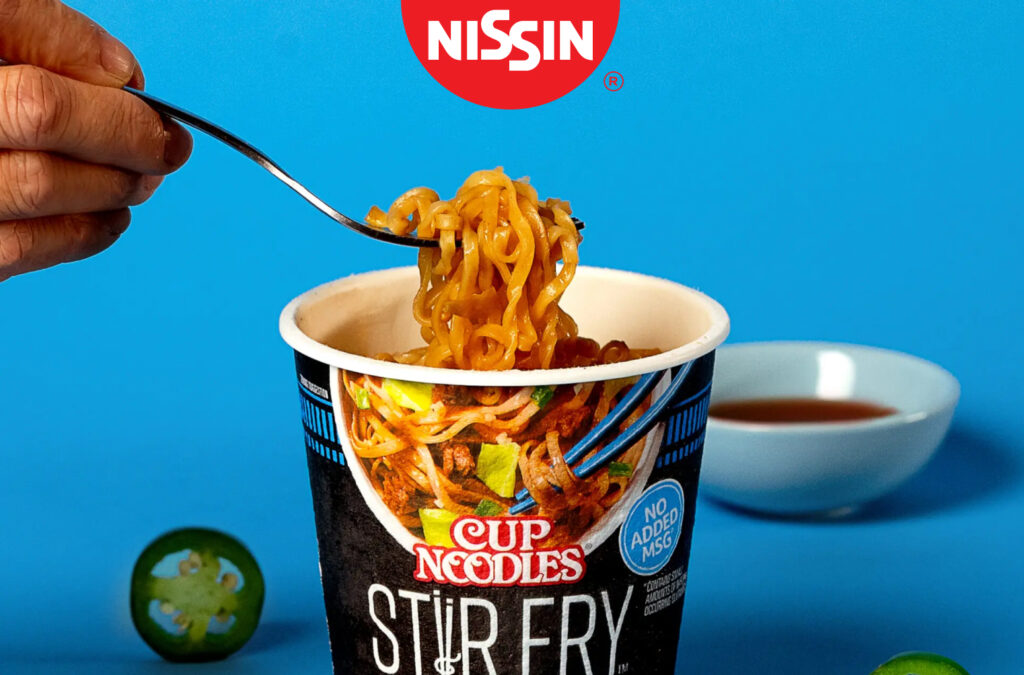
Nissin
Foods
Reimagining the digital home of the brand that invented instant noodles.
Nissin Foods created the instant noodle category. Their site and fan store needed to carry that history, keep pace with continuously growing product lines, and be easy for the team to manage.
What we delivered
We delivered a strategy-led digital experience, from brand storytelling and product discovery to eCommerce, recipes, store finding, and a flexible platform the Nissin team can manage and grow.
Result
Engaged sessions up 34% from 2023 to 2026. A site that tells the Nissin story, presents the full range clearly, connects every product to a shelf or a retailer page, and streamlines shopping across the fan store and Amazon. Three years on, the team runs new launches and limited editions on it without us.
+34% — Engaged sessions, 2023–2026
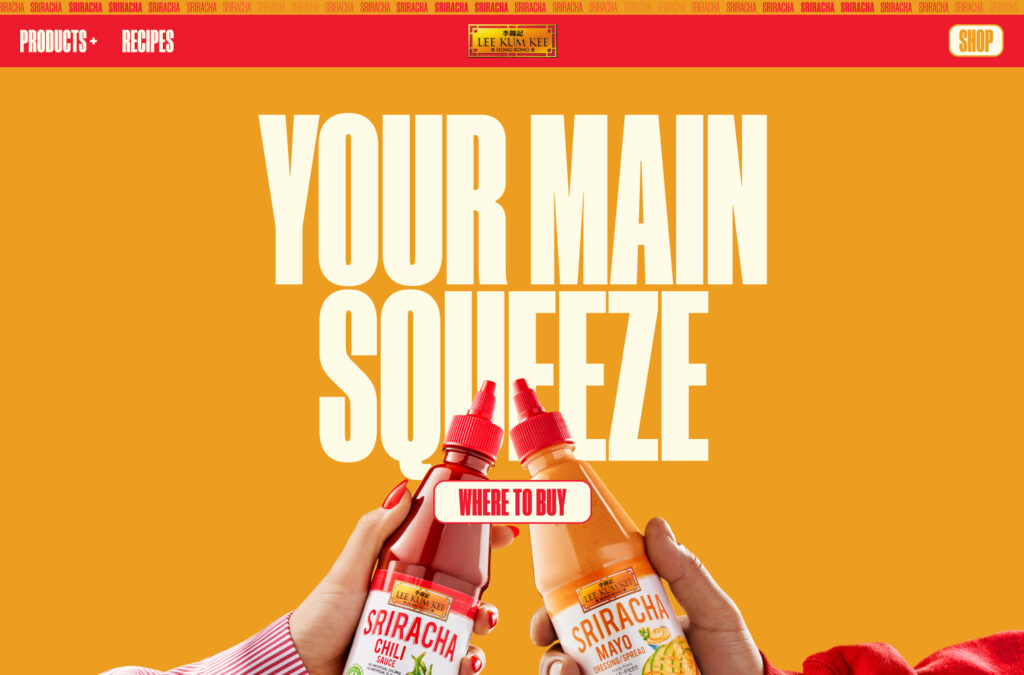
Lee Kum Kee
Launching a 138-year heritage brand's newest product for a new audience.
Lee Kum Kee is one of the most respected names in Asian cuisine worldwide. For the launch of their Sriracha and Sriracha Mayo, the brand’s agency Innerspin Marketing created the designs; we partnered with them to turn those designs into a fast, functional product site that reflects the brand’s culinary heritage and reaches a broad audience.
What we delivered
We provided strategy, technical consultancy, and development for a high-performing product launch site, translating Innerspin’s designs into a dynamic, scalable web experience built to handle launch traffic.
Result
A launch site that puts Lee Kum Kee’s newest flavors at the forefront and extends the brand’s digital footprint to a wider audience — srirachalove.com
Let’s elevate your digital
Tell us what you’re building and we’ll show you what’s possible.
What We Do
Brand & Digital Identity
- —Modern identity systems for food, beverage, and CPG brands
- —Refined product storytelling
- —Messaging frameworks that hold across global markets
Digital Systems
- —Food and beverage website design: high-performance sites on WordPress, DTC e-commerce on Shopify (including Shopify Plus builds) and WooCommerce, replatforms, and Amazon storefronts
- —Product portfolio architecture: catalogs organized by line, flavor, and format, with on-site search and filtering that make a large range easy to explore
- —New product launch support: launch banners, campaign pages, and standalone launch sites that plug into the main platform
- —Engagement features that fit the brand: recipe platforms, “hacks” and how-to content, product finders, quizzes
- —Where-to-buy that connects the site to the shelf: store locator (wheretobuy.io and similar) plus retailer deep links (Walmart, Kroger, Amazon and the rest), branded to fit
- —Product pages that carry what consumers check: nutrition facts, allergens, dietary badges, variants
- —Modular CMS built for speed, frequent product updates, and localization
- —Conversion optimization across the product page, cart, and subscription flow
Growth Ops
- —Analytics and measurement: tracking, lifecycle metrics, and creative testing set up from launch
- —SEO and GEO: product catalogs, content, and feeds structured to rank in Google and be recommended by AI assistants like ChatGPT, Claude, Perplexity, and Google AI Mode
- —Agentic commerce readiness: clean product data, accurate availability, and structured feeds so AI shopping agents (ChatGPT checkout, Google’s shopping agents, Amazon Rufus) can find, compare, and buy your products when that channel scales
- —AI across e-commerce: on-site search, recommendations, and content generation built into the Shopify, WooCommerce, and Amazon stack
- —Market pulse: trends and consumer behavior, turned into a monthly measure → implement → pivot loop
- —An ongoing partner, not a handoff: we stay on to read the data and act on it

How Do We Think
Clarity for complex portfolios
A large product range should feel simple, intuitive, and easy to search and discover.
Features that earn attention
Recipes, hacks, finders, where-to-buy: we figure out which ones fit the brand and which ones consumers actually use, then build those.
Design that drives appetite
Visuals that raise brand perception and make people want the product.
Built for global teams
Modular systems for multi-market content, launches, and localization.
Consistency across channels
Retail, DTC, packaging, content: one brand system.
Measured, then improved
Launch is the start. We track what consumers do, test, and pivot on the data.
FAQ
Questions food and beverage brands ask us
Working with food and beverage brands
-
How do you help a heritage brand reach younger consumers without losing what made it trusted?
Keep the equity, change the experience. The story, the mark, and the product truths stay. The site, the content, and the features change to how a younger, mobile-first consumer discovers and buys. Nissin’s history and founder are central to the site; the way you find a flavor or a recipe is built for someone born decades later.
-
Do you work with early-stage brands or only established companies?
Mostly established brands and heritage companies with real portfolios, and selected earlystage brands where we can be a long-term partner. For an early-stage brand the work is often a launch site and a tight e-commerce setup that can grow.
-
Do you design packaging?
No. We’re a digital agency: brand identity, website, e-commerce, and the growth work after launch. We make sure the digital brand and the packaging read as one system, and we work alongside your packaging agency when there is one.
-
How do you handle allergen, dietary, and nutrition information?
We structure it as data, not just copy: allergens, dietary badges (vegetarian, gluten-free, etc.), and nutrition facts live as consistent fields on every product, not buried in a paragraph. That’s what lets a shopper filter by it on your site and lets an AI assistant answer “is this gluten-free” correctly when asked. The facts themselves — what’s actually in the product — always come from you; we make sure they’re structured so they get used correctly everywhere.
Portfolio, launches, and features
-
How do you handle a large product portfolio across lines, markets, and languages?
We start with the architecture: how lines, flavors, formats, and regional variants relate, then build search and filtering on top of it so consumers find the right product in a couple of taps. For Nissin, that meant structuring eight product lines plus limited editions so the team can add a new one without a redesign.
-
How do you support a new product launch on the site?
Three ways, depending on the launch: a banner and collection inside the main site, a campaign landing page, or a standalone launch site that plugs back into the platform. Lee Kum Kee’s Sriracha launch got its own site; Nissin’s limited editions run through a launch system their team uses on their own.
-
Which engagement features actually work for food brands?
The ones that fit how people use the product. For Nissin, recipes and “seasoning packet hacks” attached to product pages give people a reason to return. A where-to-buy that deeplinks to retailer product pages turns interest into a purchase. We figure out which features fit your brand and which consumers use, then build those, not a feature list.
-
Do you handle photography and recipe content, or just the platform?
We build the platform and structure: the recipe template, the layout, the tagging that connects a recipe to a product. Food photography and recipe content itself usually come from you or your existing photography/content team; we make sure whatever you produce has a system to live in and get discovered, rather than sitting as one-off pages.
-
Can you integrate a store finder or where-to-buy?
Yes. A store locator, typically on wheretobuy.io, plus retailer deep links (Walmart, Kroger, Amazon and the rest), branded so it feels like part of the site. Nissin’s is called Noodle Finder.
-
Can our regional teams update content themselves?
That’s the point of the CMS work. Nissin’s team has run new launches and limited editions on their platform for three years since handover. We build so your team can add products, recipes, and campaigns without coming back to us for every change, and we stay on for the work that actually needs us.
E-commerce and platforms
-
Which e-commerce platforms do you build on?
Shopify, including Shopify Plus builds, WooCommerce, and WordPress for content-led sites,
plus Amazon storefronts. We’ll recommend the platform that fits your catalog size, team, and
retail mix, and we handle replatforms when the current one has run out of road. -
Do you work with CPG brands selling on Amazon specifically?
Yes. We build and redesign Amazon storefronts alongside your main site, so product titles,
images, and A+ content stay consistent with your brand rather than reading as a separate
channel. That consistency also matters for howAmazon’s Rufus and similar shopping
assistants describe and recommend your products, since they draw on the same listing data
shoppers see.
Getting found, including in AI search
-
Is GEO different from SEO?
Related, with different mechanics. SEO earns a ranking; generative engine optimization (GEO) earns a citation or a recommendation inside an AI answer. Both reward clear structure and real authority, so most GEO work improves SEO too. We run them together and measure both: rankings on one side, how often and how accuratelyAI assistants mention your products on
the other. -
How do we get our products recommended by ChatGPT, Perplexity, and Google AI Mode?
The same way you get found on Google, with a different set of signals. AI assistants — ChatGPT, Claude, Perplexity, Google AI Mode, and others — pull from structured product data, consistent descriptions across your site and retailers, reviews, and pages that answer real questions (“is this gluten-free,” “how do I cook it”). We audit how your products currently show up in AI answers, then restructure the catalog, content, and feeds so they get cited and recommended.
-
What is agentic commerce, and does it matter for a food brand yet?
Agentic commerce is when an AI agent doesn’t just recommend a product but completes the purchase: ChatGPT checkout, Google’s shopping agents, Amazon’s Rufus. It’s early, but the groundwork is the same as AI-search visibility: clean product data, accurate availability, structured feeds. Brands that set this up now are the ones agents will be able to buy from when volume arrives.
Process & cost
-
How long does a food and beverage website project take, and what does it cost?
Projects start at $25K, and most run between $50K and $150K depending on scope. A launch site or a focused redesign can ship within a month; a full platform covering the main site, ecommerce, and features like a portfolio rebuild or where-to-buy typically runs 3+ months. The process is the same either way: discovery, strategy and messaging, design, build, handoff, with a clear brief and milestones agreed up front.