

Trusted By:



Awwwards-recognized designers & engineers · Featured in UX Planet's Top UX Agencies 2026
Why We Exist
Aerospace and defense companies hit the same inflection points:
The next funding round, the first major government customer, the hiring push that the current site can’t carry. Every one of them is a credibility test in front of investors, program offices, and the engineers you’re trying to recruit.
We exist for that moment — to make sure the brand and digital presence are ready before it arrives, not scrambling to catch up after.
Featured case study

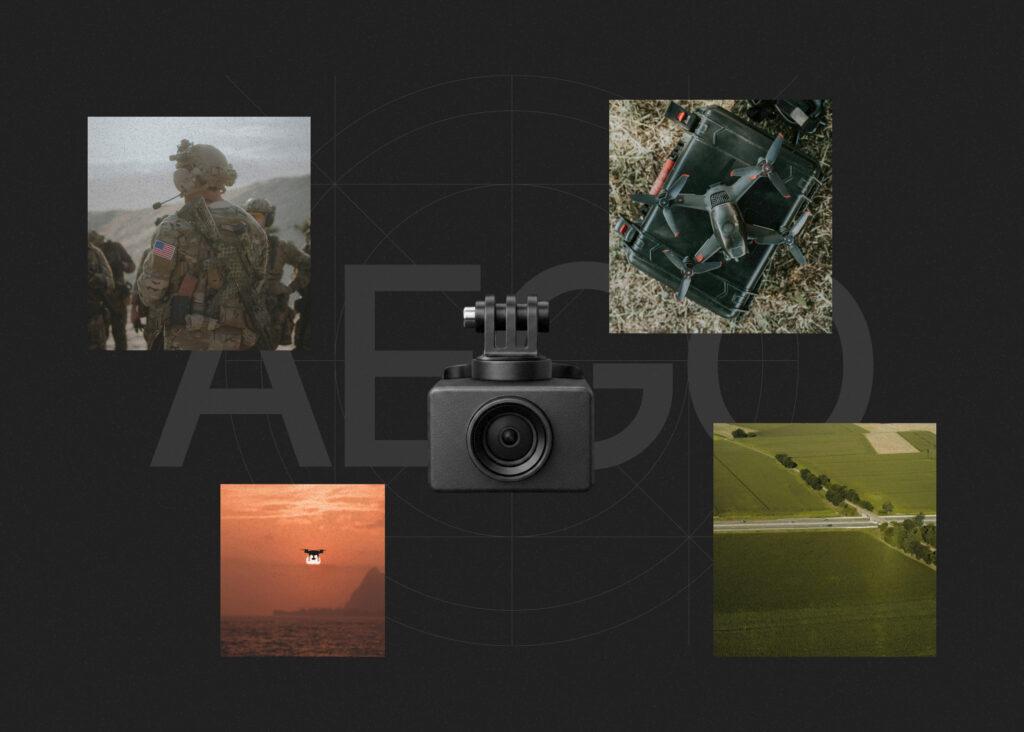
AEGO
Systems
Turning complex technology into a clear, credible market presence.
AEGO Systems needed a digital presence that could translate a highly specialized product into a story customers, partners, and stakeholders could immediately understand.
What we delivered:
- —A complete brand and digital evolution;
- —Precision visual language aligned with aerospace standards;
- —Clear storytelling for complex capabilities;
- —A secure, modular CMS built for rapid iteration;
- —Instant-load, high-performance technical execution;
- —A digital foundation ready to scale with their growth;

What We Do
Brand & Digital Identity
- —Identity systems built for the next stage, not a redo every round
- —Messaging & positioning that reads as credible to engineers and clear to everyone else
- —Investor & sales decks on the same visual system as the site
Digital Systems
- —Web design & development
- —Product design & engineering
- —Careers experiences integrated with your ATS (Ashby, Greenhouse, Manatal)
Growth Ops
- —Data-driven strategy, integrations & lead-gen infrastructure
- —SEO & GEO, structured so search engines and AI assistants can find and cite you
- —A/B testing & optimization

How Do We Think
Clarity for
Complex Systems
Your technology may be advanced; your story should feel effortless.
Built
to Scale
Your roadmap evolves. Your digital ecosystem should evolve with it.
Speed +
Precision
We match your engineering velocity without sacrificing craft.
Digital as a
Signal
Your online presence communicates readiness long before any briefing or demo.
The Difference
We don’t follow industry standards. We redefine them.
Our designers and engineers are Awwwards-recognized, and every project — from a brand identity to a full digital system — is built to that bar.
Breakthrough tech deserves Breakthrough digital
Breakthrough tech deserves Breakthrough digital
We work with Aerospace, defense, and frontier tech companies preparing for their next level — pre-seed to prime. One connected system: brand identity, messaging, deck, and digital product, built to hold up in front of investors, program offices, and the engineers you’re hiring.
FAQ
What we do
-
What makes a space or defense brand or website different from a normal B2B website?
The audience. A normal B2B website sells to one buyer with a budget. A space or defense website has to convince three at once: engineers and program offices who test every technical claim, investors judging whether the company can scale, and top engineering talent deciding whether to join. And it has to do all that while saying nothing that shouldn’t be public.
-
Is this just a website, or does it cover more?
More. Our core is digital identity — brand identity, websites, and digital product design and build — for space, defense, and frontier tech companies. Messaging, positioning, and investor decks are built on the same system, so a customer, investor, or candidate sees one company wherever they look.
-
What's included in a brand identity?
A full visual identity system: logo (primary, secondary, icon), color palette, typography, iconography, photography and art direction, and a graphic system that holds together across a website, a deck, and print
-
Do you handle messaging and positioning, or just the visuals?
Both, and messaging comes first. Before visual design starts we set positioning, voice and tone, core narrative, and how the company speaks differently to talent, government customers, and investors. The identity is then built to carry that.
-
Do we need brand strategy before a website redesign?
Usually, yes, at least a light version. A website redesign without brand strategy tends to fix how the site looks and leave the real problem in place: unclear positioning, a story that doesn’t land with investors or program offices, a careers page that doesn’t say why anyone should join. We scope the strategy to the size of the gap, so it can be a two-week sprint or a full brandbook.
-
Do you design pitch decks for fundraising rounds?
Yes. Pitch deck design, sales decks, and investor materials are part of the same engagement as brand and web work. The bar changes by round. A seed deck sells a vision; a Series B or C deck has to hold up next to real traction and several co-investors. We build to what that round needs to prove.
-
When is the right time to bring you in?
Right before an inflection point: preparing for the next funding round, a major customer push, or a scale-up the current brand and site can’t carry. That’s when identity, messaging, deck, and digital design need to move together to get you to the next level. The earlier we start, the more we can do.
-
Do you only work with space and defense companies?
We have deep expertise in space, defense, and frontier tech — from pre-seed and seed through later-stage growth — while working across industries where complex products need a clear identity. An early-stage company usually needs the same credibility signal a later-stage one has, sometimes more urgently, because the brand is doing trust-building a track record hasn’t built yet.
-
Do you work with companies that haven't raised a round yet?
Yes. Pre-seed and self-funded companies are exactly the stage where a credible brand and site do the most work, since there’s no track record yet to lean on. We scope the engagement to what the stage actually needs — often a tighter, faster brand and site rather than the full build a later-stage company takes on.
-
Once you deliver our brand and UI style guide, is that the end?
Rarely. Most of our client relationships keep going well past launch. There are always new ideas and trends to bring in, data to analyze, and sometimes a pivot to design for, and that applies to the live digital platform as much as the brand.
-
What does the AI-ready design skill actually do?
It’s a structured reference — colors, type, voice, layout rules, do/don’t examples — that an AI tool (Claude, ChatGPT, Figma AI, internal tools) reads before generating anything. Instead of a static PDF style guide that drifts the moment someone new touches it, your team can generate new assets, drafts, or layouts that actually stay on-brand, at the speed AI tools work.
Talent
-
How can you help find and attract top talent?
Every serious space and defense company is competing for the same engineers, so the careers experience has to work as hard as the product story. We design the experience and the integration: careers pages, application flow, and the connection to yourATS (Ashby, Greenhouse, Manatal) so roles and candidate data stay in sync. Job descriptions and role content come from your team; we make sure the site presents them well and routes candidates cleanly into your platform.
Government & technical customers
-
How do you communicate capability to a government or defense customer without overstating it?
We design to one line: credible to an engineer or program office, clear to a non-specialist evaluator, never oversold. Every claim has to hold up in front of someone who knows the technology.
-
Have you built for a company selling directly to the U.S. government?
Yes. Castelion is the clearest example — digital partner from their earliest funded rounds through a $1B Series C.
-
How do you handle what can and can't be shown publicly?
Your team decides what’s cleared for public release, and we work only with that. Our job is to make a site that’s clear and credible using approved content alone.
Investors
-
How do you help us look credible to investors across multiple rounds?
Space and defense fundraising plays out over years, with the same investors returning with sharper questions each time. We build the brand and site as one system that can evolve across every round, so you’re not starting over each time a raise approaches.
-
Can you translate deep tech work into a story investors will back?
That’s the core of what we do. ForAsymm, we designed the logo and brand identity — a distinct, credible mark for a technically dense deep tech company. That kind of clarity is what lets investors back a thesis quickly.
Process & cost
-
How long does a project take, and what does it cost?
Projects start at $25K, and most run between $50K and $150K depending on scope. A brand identity, deck, and possibly a landing page can ship within a month; a full brandbook alongside a complete website typically runs 3+ months. The process is the same either way: discovery, strategy and messaging, design, build, handoff, with a clear brief and milestones agreed up front.
-
How much does a B2B website redesign cost for a deep tech company?
It depends on scope and on who does it; a freelancer, a boutique studio, and a large agency will quote very different numbers for the same brief. Our projects typically land between $50K and $150K for full scope. What moves the number: how deep the branding exercise needs to go, how many page templates and how much bespoke design work the site needs, frontend complexity, and how much custom functionality sits behind it.
-
What do we own after the project, and what happens after launch?
All final source files, brand guidelines, and site code/CMS access transfer to you. After launch is where the growth work starts: we set up analytics, watch how investors, customers, and candidates actually use the site, segment those audiences, and figure out which features earn their place, then add, adjust, or pivot on the data. Where useful, we also run hosting, security, and performance (Cloudflare and similar); what that covers varies by client.